Robin Urrutia, M.Sc.
Publications
2025

Urrutia, R; Espejo, D; Guerra, M; Vio, K; Sühn, T; Esmaeili, N; Boese, A; Fuentealba, P; Illanes, A; Hansen, C; Poblete, V
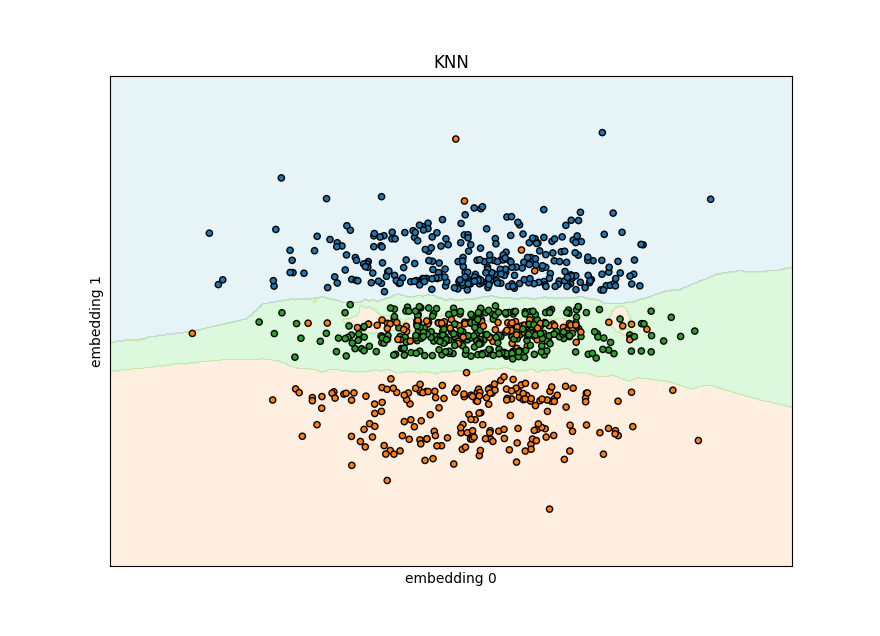
Exploring Deep Clustering Methods in Vibro-Acoustic Sensing for Enhancing Biological Tissue Characterization Journal Article
In: IEEE Access, vol. 13, pp. 80395–80406, 2025, ISSN: 2169-3536.
@article{urrutia_exploring_2025,
title = {Exploring Deep Clustering Methods in Vibro-Acoustic Sensing for Enhancing Biological Tissue Characterization},
author = {R Urrutia and D Espejo and M Guerra and K Vio and T Sühn and N Esmaeili and A Boese and P Fuentealba and A Illanes and C Hansen and V Poblete},
url = {https://ieeexplore.ieee.org/document/10981752/},
doi = {10.1109/ACCESS.2025.3566280},
issn = {2169-3536},
year = {2025},
date = {2025-01-01},
urldate = {2025-01-01},
journal = {IEEE Access},
volume = {13},
pages = {80395–80406},
abstract = {Nonlinear dimensionality reduction techniques, often referred to as manifold learning, are increasingly valuable for data visualization and unsupervised clustering. In the context of surgery and medicine, these methods facilitate the analysis of complex datasets, enabling pattern recognition in surgical data. This study explores the characterization of six tissue types through manifold learning and unsupervised clustering, utilizing vibro-acoustic (VA) signals collected from manual palpation experiments. A wireless sensor mounted at the tip of a surgical instrument was used to acquire 1,680 VA signals, which were processed using Fourier transform and cepstral analysis for feature extraction. We assessed the performance of two dimensionality reduction techniques: uniform manifold approximation and projection (UMAP) and variational autoencoder (VAE). Results indicate that cepstral features combined with UMAP yield superior clustering performance compared to VAE, achieving higher classification accuracy ( 92 % vs. 87 % ) and better-defined clusters with greater compactness. The observed differences in performance are linked to the intrinsic properties of the tissues, particularly surface characteristics such as friction and moisture, which affect signal consistency. Additionally, we compared our approach with previous works, including a study utilizing the same dataset, where our methodology demonstrated improved accuracy. Future research will focus on refining the VAE model, increasing the diversity of tissue samples, and validating the proposed approach in real surgical settings to enhance its applicability in minimally invasive surgery.},
keywords = {},
pubstate = {published},
tppubtype = {article}
}

Urrutia, R; Ayman, F; Boese, A; Hansen, C; Illanes, A
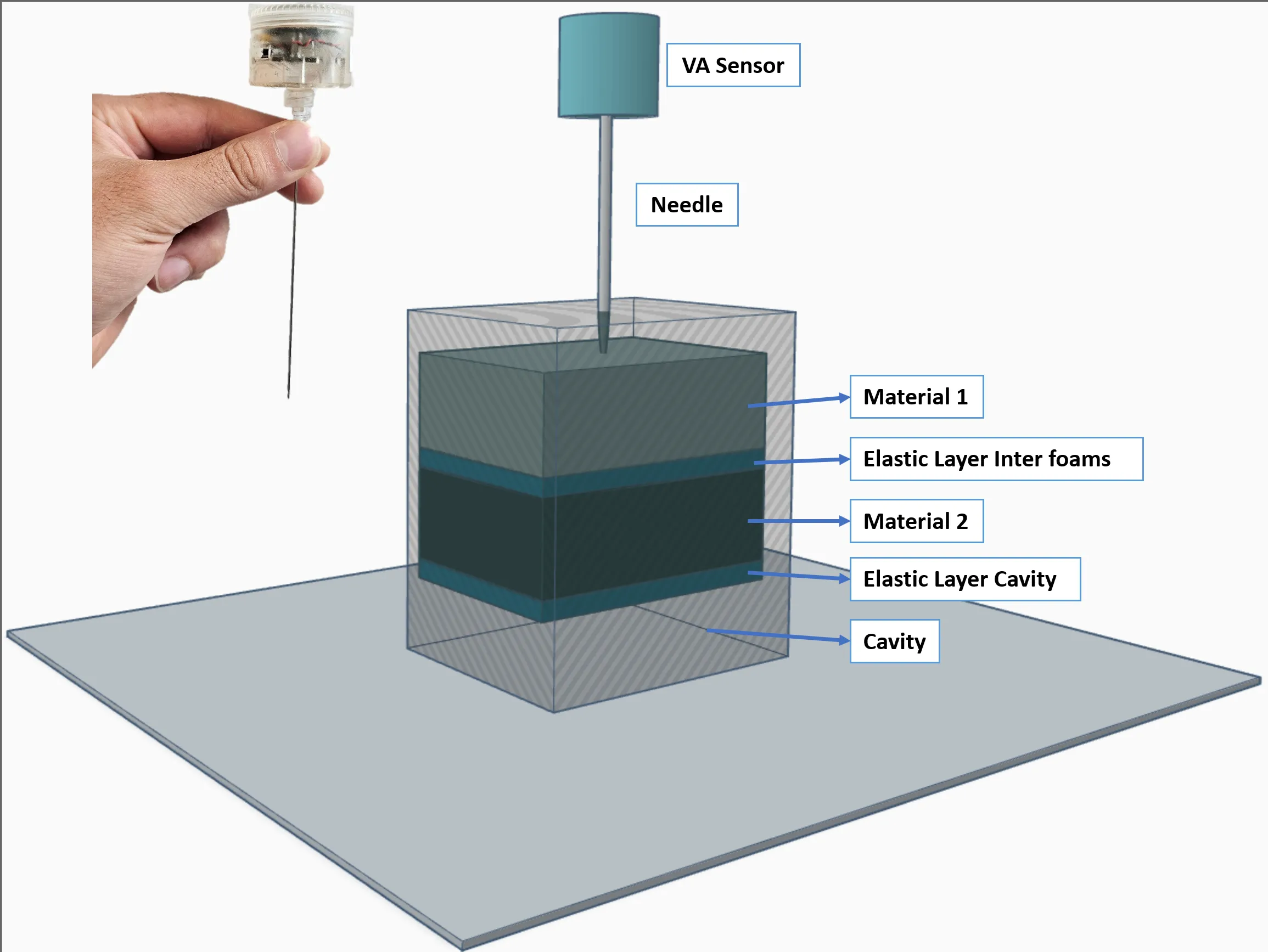
Needle Puncture Detection Using Vibroacoustic Sensing in Layered Phantoms Journal Article
In: 2025.
@article{urrutia_needle_2025,
title = {Needle Puncture Detection Using Vibroacoustic Sensing in Layered Phantoms},
author = {R Urrutia and F Ayman and A Boese and C Hansen and A Illanes},
year = {2025},
date = {2025-01-01},
urldate = {2025-01-01},
keywords = {},
pubstate = {published},
tppubtype = {article}
}
2024

Urrutia, R; Espejo, D; Sühn, T; Guerra, M; Fuentealba, P; Poblete, V; Boese, A; Illanes, A
Variational Autoencoder feature clustering for tissue classification in robotic palpation. Journal Article
In: Current Directions in Biomedical Engineering, vol. 10, iss. 1, pp. 89, 2024, ISSN: 2364-5504.
@article{urrutia2024variational,
title = {Variational Autoencoder feature clustering for tissue classification in robotic palpation.},
author = {R Urrutia and D Espejo and T Sühn and M Guerra and P Fuentealba and V Poblete and A Boese and A Illanes},
doi = {10.1515/cdbme-2024-0123},
issn = {2364-5504},
year = {2024},
date = {2024-01-01},
urldate = {2024-01-01},
journal = {Current Directions in Biomedical Engineering},
volume = {10},
issue = {1},
pages = {89},
abstract = {Minimally Invasive Robotic Surgery (MIRS) has emerged as a transformative approach in surgical practice, offering reduced patient trauma and enhanced precision. However, challenges persist, including the loss of tactile feedback for surgeons. This study explores the application of machine learning algorithms, specifically variational autoencoders, in vibro-acoustic (VA) signal analysis to address this issue. Our comparative analysis evaluates the potential of supervised learning in surgical data analysis, contributing to advancements in surgical technology. Despite achieving an accuracy of 81%, our results indicate opportunities for further refinement, considering the superior accuracies reported in previous studies. This research underscores the importance of innovative approaches in medical data analysis for optimizing patient care in minimally invasive surgery.},
keywords = {},
pubstate = {published},
tppubtype = {article}
}
2023

Urrutia, R; Espejo, D; Evens, N; Guerra, M; Sühn, T; Boese, A; Hansen, C; Fuentealba, P; Illanes, A; Poblete, V
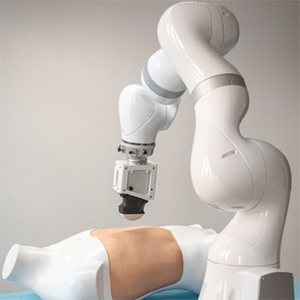
Clustering Methods for Vibro-Acoustic Sensing Features as a Potential Approach to Tissue Characterisation in Robot-Assisted Interventions Journal Article
In: Sensors, vol. 23, no. 23, pp. 9297, 2023, ISSN: 1424-8220, (Publisher: Multidisciplinary Digital Publishing Institute).
@article{urrutia_clustering_2023,
title = {Clustering Methods for Vibro-Acoustic Sensing Features as a Potential Approach to Tissue Characterisation in Robot-Assisted Interventions},
author = {R Urrutia and D Espejo and N Evens and M Guerra and T Sühn and A Boese and C Hansen and P Fuentealba and A Illanes and V Poblete},
url = {https://www.mdpi.com/1424-8220/23/23/9297},
doi = {10.3390/s23239297},
issn = {1424-8220},
year = {2023},
date = {2023-01-01},
urldate = {2023-01-01},
journal = {Sensors},
volume = {23},
number = {23},
pages = {9297},
abstract = {This article provides a comprehensive analysis of the feature extraction methods applied to vibro-acoustic signals (VA signals) in the context of robot-assisted interventions. The primary objective is to extract valuable information from these signals to understand tissue behaviour better and build upon prior research. This study is divided into three key stages: feature extraction using the Cepstrum Transform (CT), Mel-Frequency Cepstral Coefficients (MFCCs), and Fast Chirplet Transform (FCT); dimensionality reduction employing techniques such as Principal Component Analysis (PCA), t-Distributed Stochastic Neighbour Embedding (t-SNE), and Uniform Manifold Approximation and Projection (UMAP); and, finally, classification using a nearest neighbours classifier. The results demonstrate that using feature extraction techniques, especially the combination of CT and MFCC with dimensionality reduction algorithms, yields highly efficient outcomes. The classification metrics (Accuracy, Recall, and F1-score) approach 99%, and the clustering metric is 0.61. The performance of the CT–UMAP combination stands out in the evaluation metrics.},
note = {Publisher: Multidisciplinary Digital Publishing Institute},
keywords = {},
pubstate = {published},
tppubtype = {article}
}

Sühn, T; Esmaeili, N; Mattepu, S; Spiller, M; Boese, A; Urrutia, R; Poblete, V; Hansen, C; Lohmann, C; Illanes, A; Friebe, M
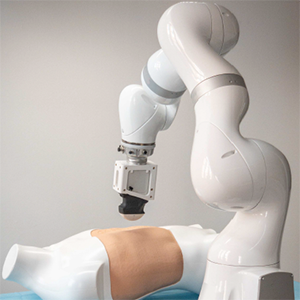
Vibro-Acoustic Sensing of Instrument Interactions as a Potential Source of Texture-Related Information in Robotic Palpation Journal Article
In: Sensors, vol. 23, no. 6, pp. 3141, 2023, ISSN: 1424-8220, (Publisher: Multidisciplinary Digital Publishing Institute).
@article{suhn_vibro-acoustic_2023,
title = {Vibro-Acoustic Sensing of Instrument Interactions as a Potential Source of Texture-Related Information in Robotic Palpation},
author = {T Sühn and N Esmaeili and S Mattepu and M Spiller and A Boese and R Urrutia and V Poblete and C Hansen and C Lohmann and A Illanes and M Friebe},
url = {https://www.mdpi.com/1424-8220/23/6/3141},
doi = {10.3390/s23063141},
issn = {1424-8220},
year = {2023},
date = {2023-01-01},
urldate = {2023-01-01},
journal = {Sensors},
volume = {23},
number = {6},
pages = {3141},
abstract = {The direct tactile assessment of surface textures during palpation is an essential component of open surgery that is impeded in minimally invasive and robot-assisted surgery. When indirectly palpating with a surgical instrument, the structural vibrations from this interaction contain tactile information that can be extracted and analysed. This study investigates the influence of the parameters contact angle α and velocity v→ on the vibro-acoustic signals from this indirect palpation. A 7-DOF robotic arm, a standard surgical instrument, and a vibration measurement system were used to palpate three different materials with varying α and v→. The signals were processed based on continuous wavelet transformation. They showed material-specific signatures in the time–frequency domain that retained their general characteristic for varying α and v→. Energy-related and statistical features were extracted, and supervised classification was performed, where the testing data comprised only signals acquired with different palpation parameters than for training data. The classifiers support vector machine and k-nearest neighbours provided 99.67% and 96.00% accuracy for the differentiation of the materials. The results indicate the robustness of the features against variations in the palpation parameters. This is a prerequisite for an application in minimally invasive surgery but needs to be confirmed in realistic experiments with biological tissues.},
note = {Publisher: Multidisciplinary Digital Publishing Institute},
keywords = {},
pubstate = {published},
tppubtype = {article}
}