

Aqsa Sabir, M.Sc.
Short Bio
RESEARCH SCIENTIST
Faculty of Computer Science
Otto-von-Guericke University Magdeburg
EDUCATION
2016-2020 Bachelor's (Information Technology), Government College University Faisalabad, Pakistan
2022-2024 Master's (Computer Science), Chung Ang University, Seoul, South Korea
PROFESSIONAL EXPERIENCE
Mar 2025 – Jul 2025 Research Engineer (Full-Time), NTCSoft Inc. Seoul, South Korea
Nov 2024 – Feb 2025 Senior Research Engineer (Contract), IKLab Inc. Seoul, South Korea
Sep 2022 – Aug 2024 Master's Research Assistant - Unity Developer, Seoul, South Korea
May 2021 – Jun 2022 Management Trainee Officer - Shahid Builders, Lahore, Pakistan
Mar 2018 – Aug 2022 Graphic Designer & Web Developer - Freelancer, Pakistan
Research Interests
Virtual/Augmented Reality for Education and Training
Conversational AI for Interactive Learning
More specifically, Agentic AI for Medical Handovers in VR
Publications
2026
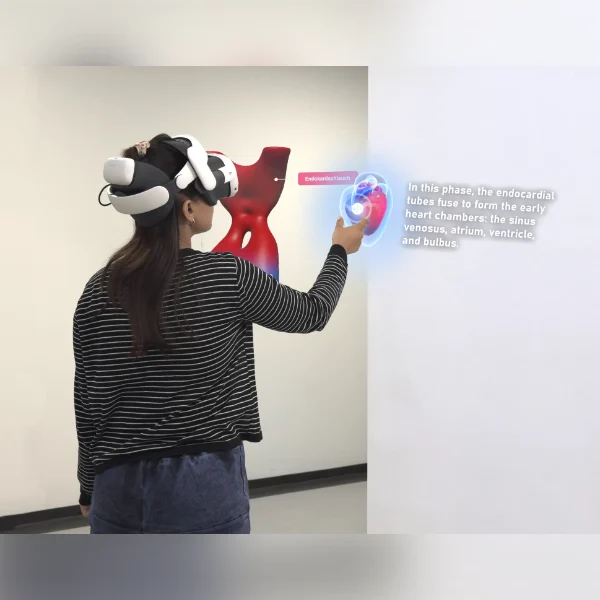
Sabir, A; Ringler, E; Mandel, J; Hansen, C; Schott, D
Evaluation of a State-Aware Conversational AI Agent for Immersive Anatomy Education Proceedings Article
In: IEEE Conference on Virtual Reality and 3D User Interfaces (VRW), pp. 790-794, 2026.
@inproceedings{Sabir2026,

title = {Evaluation of a State-Aware Conversational AI Agent for Immersive Anatomy Education},

author = {A Sabir and E Ringler and J Mandel and C Hansen and D Schott},

url = {https://ieeexplore.ieee.org/document/11489889},

doi = {10.1109/VRW70859.2026.00151},

year  = {2026},

date = {2026-04-30},

urldate = {2026-04-30},

booktitle = {IEEE Conference on Virtual Reality and 3D User Interfaces (VRW)},

pages = {790-794},

abstract = {The dynamic 3D morphology and temporal complexity of embryonic heart development make it difficult to comprehend. We introduce Reinheart, a conversational AI tutor for anatomy education that is state-aware and integrated into a mixed-reality learning environment. The AI tutor uses OpenAI services to provide voice-based tutoring in real-time with interactive 3D visualization. Using a mixed-method analysis, ten anatomy experts assessed pedagogical performance, usability, and trust. The results indicated high ease-of-use and positive social presence, while qualitative feedback revealed limited uncertainty in communication and instability in challenge tasks. Experts supported the tutor’s potential for conceptual reinforcement and guided exploration. To improve contextual reasoning and instructional reliability in MR anatomy learning, future work should extend this framework with domain-specific, uncertainty-aware AI.},

keywords = {},

pubstate = {published},

tppubtype = {inproceedings}

}
2025
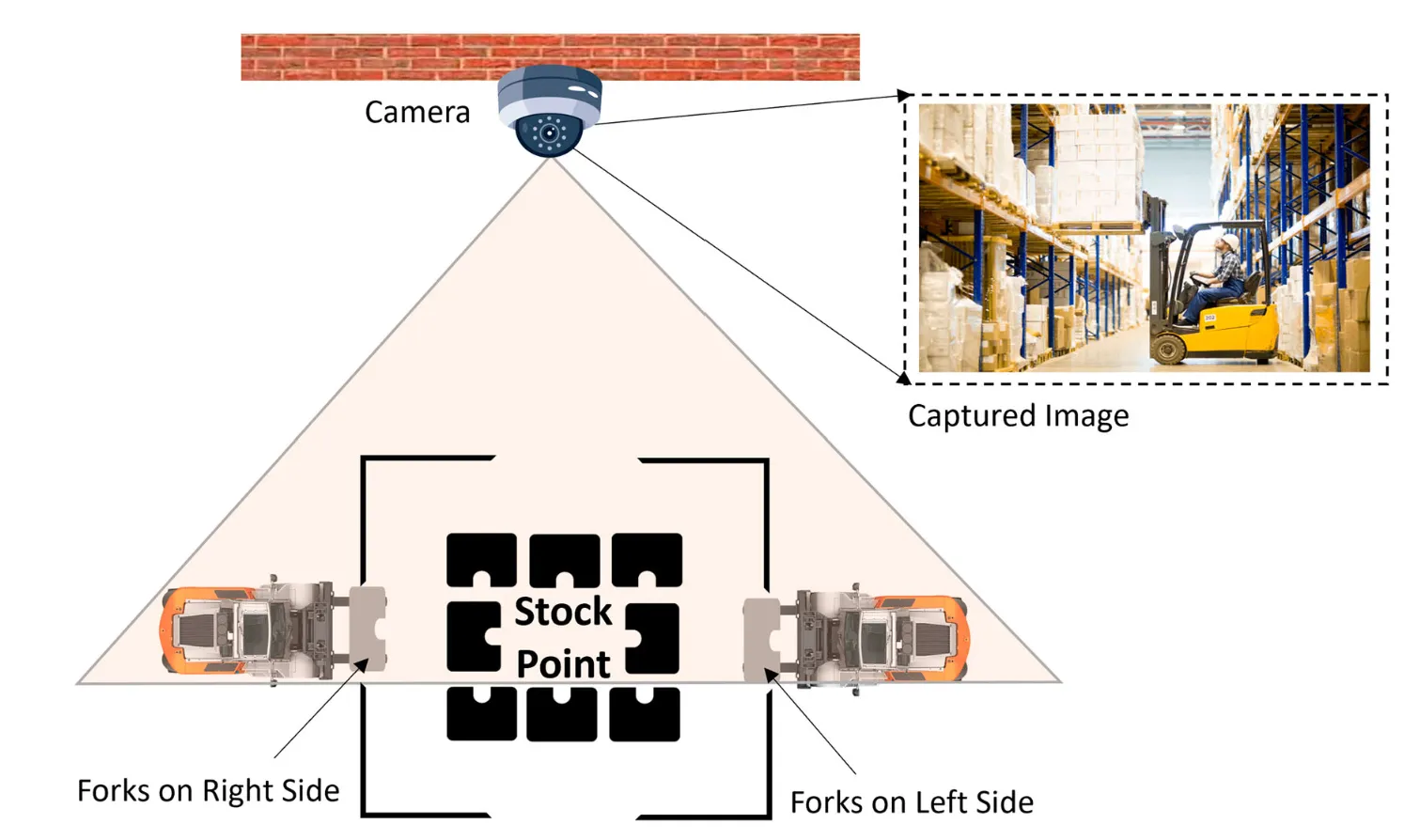
Sabir, A; Hussain, R; Abbas, MS; Zaidi, SFA; Yang, J; Park, C
Computer vision-based safe distance-estimation method to prevent forklift tip-overs Journal Article
In: International Journal of Occupational Safety and Ergonomics (JOSE), vol. 31 , pp. 1-20, 2025.
@article{Sabir2025b,

title = {Computer vision-based safe distance-estimation method to prevent forklift tip-overs},

author = {A Sabir and R Hussain and MS Abbas and SFA Zaidi and J Yang and C Park},

url = {https://doi.org/10.1080/10803548.2025.2543150},

doi = {10.1080/10803548.2025.2543150},

year  = {2025},

date = {2025-08-26},

urldate = {2025-08-26},

journal = {International Journal of Occupational Safety and Ergonomics (JOSE)},

volume = {31 },

pages = {1-20},

abstract = {The construction industry faces significant risks from forklift tip-overs, often caused by improper load positioning that shifts the center of gravity beyond the stability triangle. Manual safety inspections are time-consuming and require constant human presence. To address this, the study proposes a computer vision-based distance-estimation method using forklift length to measure the critical distance between forks and the load’s center of gravity. The system integrates forklift safety regulations, object detection via YOLOv8, the safe distance-estimation module (SafeDEM) and behavior classification based on US OSHA standards. Two safety scenarios were tested using a 24-inch safety threshold (if forklift length = 120 in). Our model achieved 93% classification accuracy (safe/unsafe) on 156 images, enabling early hazard detection prior to forklift movement. Although current testing focuses on static stock-point operations, the system’s real-time speed (24 FPS) supports future dynamic deployment. This method offers a scalable, non-intrusive solution for enhancing machine stability and workplace safety.},

keywords = {},

pubstate = {published},

tppubtype = {article}

}
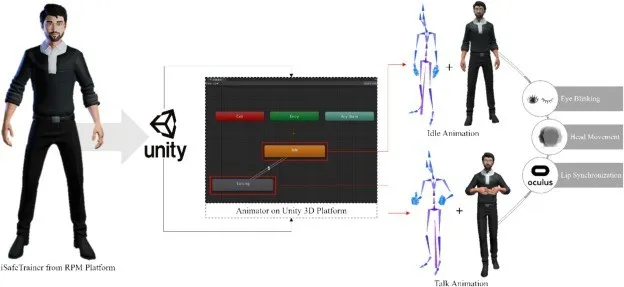
Sabir, A; Hussain, R; Pedro, A; Park, C
Personalized construction safety training system using conversational AI in virtual reality Journal Article
In: Automation in Construction, vol. 175, pp. 106207, 2025.
@article{Sabir2025,

title = {Personalized construction safety training system using conversational AI in virtual reality},

author = {A Sabir and R Hussain and A Pedro and C Park},

url = {https://doi.org/10.1016/j.autcon.2025.106207},

doi = {10.1016/j.autcon.2025.106207},

year  = {2025},

date = {2025-07-01},

urldate = {2025-07-01},

journal = {Automation in Construction},

volume = {175},

pages = {106207},

abstract = {Training workers in safety protocols is crucial for mitigating job site hazards, yet traditional methods often fall short. This paper explores integrating virtual reality (VR) and large language models (LLMs) into iSafeTrainer, an AI-powered safety training system. The system allows trainees to engage with trade-specific content tailored to their expertise level in a third-person perspective in a non-immersive desktop virtual environment, eliminating the need for head-mounted displays. An experimental study evaluated the system through qualitative, survey-based assessments, focusing on user satisfaction, experience, engagement, guidance, and confidence. Results showed high satisfaction rates (>85 %) among novice users, with improved safety knowledge. Expert users suggested advanced scenarios, highlighting the system's potential for expansion. The modular architecture supports customization across various construction settings, ensuring adaptability for future improvements.},

keywords = {},

pubstate = {published},

tppubtype = {article}

}
2024

Sabir, A; Hussain, R; Pedro, A; Soltani, M; Lee, D; Park, C; Pyeon, JH
International Conference on Construction Engineering and Project Management; Korea Institute of Construction Engineering and Management: Seoul, Republic of Korea, Korea Institute of Construction Engineering and Management, 2024.
@conference{sabir2024b,

title = {Synthetic data generation with unity 3D and unreal engine for construction hazard scenarios: a comparative analysis},

author = {A Sabir and R Hussain and A Pedro and M Soltani and D Lee and C Park and JH Pyeon},

url = {https://www.researchgate.net/publication/382888381_Synthetic_Data_Generation_with_Unity_3D_and_Unreal_Engine_for_Construction_Hazard_Scenarios_A_Comparative_Analysis},

year  = {2024},

date = {2024-08-29},

urldate = {2024-08-29},

booktitle = {International Conference on Construction Engineering and Project Management; Korea Institute of Construction Engineering and Management: Seoul, Republic of Korea},

pages = {1286-1288},

publisher = {Korea Institute of Construction Engineering and Management},

abstract = {Based on current insights, this comparative analysis underscores the user-friendly interface and adaptability of Unity 3D, featuring a built-in perception package that facilitates automatic labeling for SDG [13]. This functionality enhances accessibility and simplifies the SDG process for users. Conversely, Unreal Engine is distinguished by its advanced graphics and realistic rendering capabilities. It offers plugins like EasySynth (which does not provide automatic labeling) and NDDS for SDG [14],[15]. The development complexity associated with Unreal Engine presents challenges for novice users, whereas the more approachable platform of Unity 3D is advantageous for beginners. This research provides an in-depth review of the latest advancements in SDG, shedding light on potential future research and development directions. The study concludes that the integration of such game engines in ML model training markedly enhances hazard recognition and decision-making skills among construction professionals, thereby significantly advancing data acquisition for machine learning in construction safety monitoring.},

keywords = {},

pubstate = {published},

tppubtype = {conference}

}
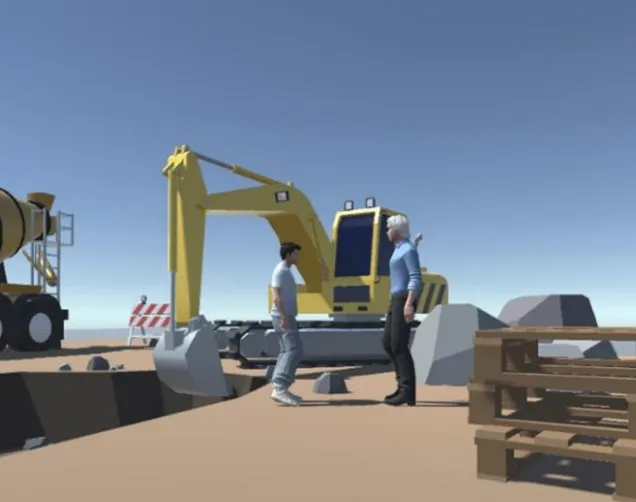
Sabir, A; Hussain, R; Zaidi, SFA; Abbas, MS; Khan, N; Lee, DY; Park, C
Korea Institute of Construction Engineering and Management (한국건설관리학회), 2024.
@conference{Sabir2024b,

title = {Integrating conversational AI-based serious games to enhance problem-solving skills of construction students},

author = {A Sabir and R Hussain and SFA Zaidi and MS Abbas and N Khan and DY Lee and C Park},

url = {https://doi.org/10.6106/ICCEPM.2024.1220},

doi = {10.6106/ICCEPM.2024.1220},

year  = {2024},

date = {2024-07-29},

urldate = {2024-07-29},

pages = {1220-1229},

publisher = {Korea Institute of Construction Engineering and Management (한국건설관리학회)},

abstract = {In the construction industry, professionals are required to have advanced problem-solving skills to adeptly handle the dynamic challenges inherent to project execution. These skills are crucial, as they enable professionals to effectively navigate the complexities and unpredictability of construction projects, ensuring timely and cost-effective completion. This paper explores an innovative approach to enhance the problem-solving skills of construction students through the integration of conversational AI-based serious games into their educational curriculum. The objective of this research was acquired by following three phases: hazard interaction, problem identification, and AI-guided text-based communication. This approach creates an engaging learning environment, simulating real-world construction challenges and problems, focusing on the excavation phase of a construction project as a case study for students to interact with and communicate with the Conversational AI agent through text-based prompts. In the future, the proposed study can be used to evaluate how AI agents can help enhance problem-solving skills by promoting emotional engagement among participants. This research sheds light on the potential of integrating conversational AI in education, providing valuable insights for educators designing construction management training programs by underscoring the importance of engagement in real-world problem-solving scenarios.},

keywords = {},

pubstate = {published},

tppubtype = {conference}

}
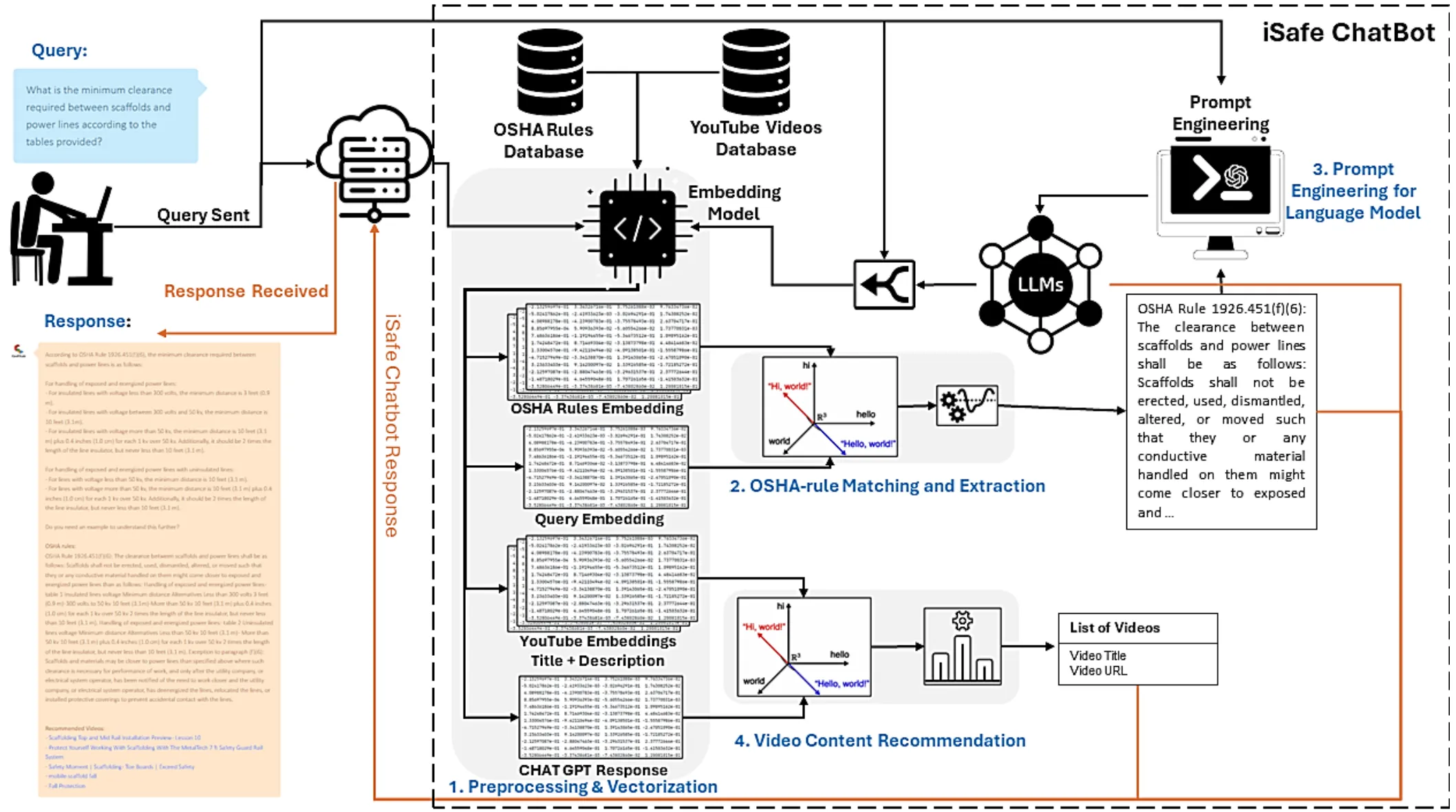
Zaidi, SFA; Abbas, MS; Hussain, R; Sabir, A; Khan, N; Yang, J; park, C
International conference on construction engineering and project management, vol. 10, Korea Institute of Construction Engineering and Management (한국건설관리학회), 2024.
@conference{Sabir2024e,

title = {iSafe chatbot: natural language processing and large language model driven construction safety learning through OSHA rules and video content delivery},

author = {SFA Zaidi and MS Abbas and R Hussain and A Sabir and N Khan and J Yang and C park},

url = {https://doi.org/10.6106/ICCEPM.2024.1238},

doi = {10.6106/ICCEPM.2024.1238},

year  = {2024},

date = {2024-07-29},

urldate = {2024-07-29},

booktitle = {International conference on construction engineering and project management},

volume = {10},

pages = {1238-1246},

publisher = {Korea Institute of Construction Engineering and Management (한국건설관리학회)},

abstract = {The construction industry faces the challenge of providing effective, engaging, and rulespecific safety learning. Traditional methodologies exhibit limited adaptability to technological advancement and struggle to deliver optimal learning experiences. Recently, there has been widespread adoption of information retrieval and ontology-based chatbots, as well as content delivery methods, for safety learning and education. However, existing information and content retrieval methods often struggle with accessing and presenting relevant safety learning materials efficiently. Additionally, the rigid and complex structures of ontology-based approaches pose obstacles in accommodating dynamic content and scaling for large datasets. They require more computational resources for ontology management. To address these limitations, this paper introduces iSafe Chatbot, a novel framework for construction safety learning. Leveraging Natural Language Processing (NLP) and Large Language Model (LLM), iSafe Chatbot aids safety learning by dynamically retrieving and interpreting relevant Occupational Safety and Health Administration (OSHA) rules from the comprehensive safety regulation database. When a user submits a query, iSafe Chatbot identifies relevant regulations and employs LLM techniques to provide clear explanations with practical examples. Furthermore, based on the user's query and context, iSafe Chatbot recommends training video content from video database, enhancing comprehension and engagement. Through advanced NLP, LLM, and video content delivery, iSafe Chatbot promises to revolutionize safety learning in construction, providing an effective, engaging, and rule-specific experience. Preliminary tests have demonstrated the potential of the iSafe Chatbot. This framework addresses challenges in accessing safety materials and aims to enhance knowledge and adherence to safety protocols within the industry.},

keywords = {},

pubstate = {published},

tppubtype = {conference}

}
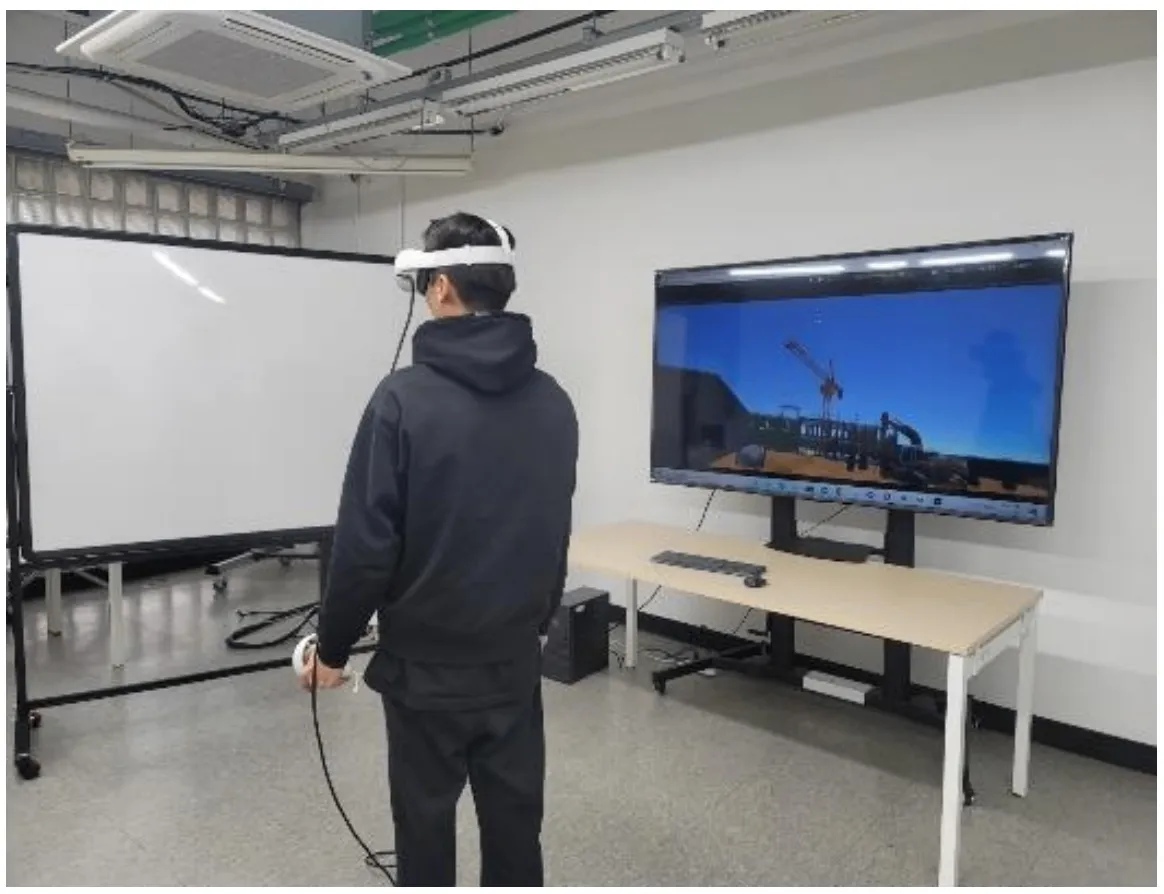
Hussain, R; Sabir, A; Abbas, MS; Khan, N; Zaidi, SFA; Park, C; Lee, D
Multi-agent Conversational AI System for Personalized Learning of Construction Knowledge Conference
Korea Institute of Construction Engineering and Management (한국건설관리학회), 2024.
@conference{Sabir2024d,

title = {Multi-agent Conversational AI System for Personalized Learning of Construction Knowledge},

author = {R Hussain and A Sabir and MS Abbas and N Khan and SFA Zaidi and C Park and D Lee },

url = {https://doi.org/10.6106/ICCEPM.2024.1230},

doi = {10.6106/ICCEPM.2024.1230},

year  = {2024},

date = {2024-07-29},

urldate = {2024-07-29},

pages = {1230-1237},

publisher = {Korea Institute of Construction Engineering and Management (한국건설관리학회)},

abstract = {Personalized learning is a critical factor in optimizing performance on construction sites. Traditional pedagogical methods often adhere to a one-size-fits-all approach, failing to provide the nuanced adaptation required to cater to diverse knowledge needs, roles, and learning preferences. While advancements in technology have led to improvements in personalized learning within construction education, the crucial connection between instructors' roles and training environment to personalized learning success remains largely unexplored. To address these gaps, this research proposes a novel learning approach utilizing multi-agent, context-specific AI agents within construction virtual environments. This study aims to pioneer an innovative approach leveraging the Large Language Model's capabilities with prompt engineering to make domain-specific conversations. Through the integration of AI-driven conversations in a realistic 3D environment, users will interact with domain-specific agents, receiving personalized safety guidance and information. The system's performance is assessed using the five evaluation criteria, including learnability, interaction, communication, relevancy, and visualization. The results revealed that the proposed approach has the potential to significantly enhance safety learning in the construction industry, which may lead to improve practices and reduction in accidents on diverse construction sites.},

keywords = {},

pubstate = {published},

tppubtype = {conference}

}

Sabir, A; Hussain, R; Lee, DY; Zaidi, SF; Pedro, A; Abbas, MS; Park, C
Conversational AI-based VR system to improve construction safety training of migrant workers Journal Article
In: Automation in Construction, vol. 160, iss. 0926-5805, pp. 105315, 2024.
@article{sabir2024a,

title = {Conversational AI-based VR system to improve construction safety training of migrant workers},

author = {A Sabir and R Hussain and DY Lee and SF Zaidi and A Pedro and MS Abbas and C Park},

url = {https://doi.org/10.1016/j.autcon.2024.105315},

doi = {10.1016/j.autcon.2024.105315},

year  = {2024},

date = {2024-04-01},

urldate = {2024-04-01},

journal = {Automation in Construction},

volume = {160},

issue = {0926-5805},

pages = {105315},

abstract = {Inadequate communication during construction safety training can hinder knowledge transfer to workers, particularly migrant workers who face linguistic and literacy barriers, resulting in higher rates of fatal injuries. Additionally, limited abilities of trainers can further exacerbate this problem. To overcome these gaps, this paper presents a virtual reality-based knowledge delivery approach by integrating artificial Intelligence (AI) agent using ChatGPT as a live instructor. The system's effectiveness is assessed with participants from five countries. Results show a significant increase of 23% in scores between pre- and post-tests, indicating improved knowledge. The system performs uniformly across diverse language and educational backgrounds particularly benefiting those with prior experience. This research significantly contributes to the global construction community by improving safety training, promotes safer practices, and ultimately reduces accidents in diversified construction sites. It also opens avenues for research in immersive technologies and AI techniques, advancing in training methodologies and enhancing safety outcomes.},

keywords = {},

pubstate = {published},

tppubtype = {article}

}
2023
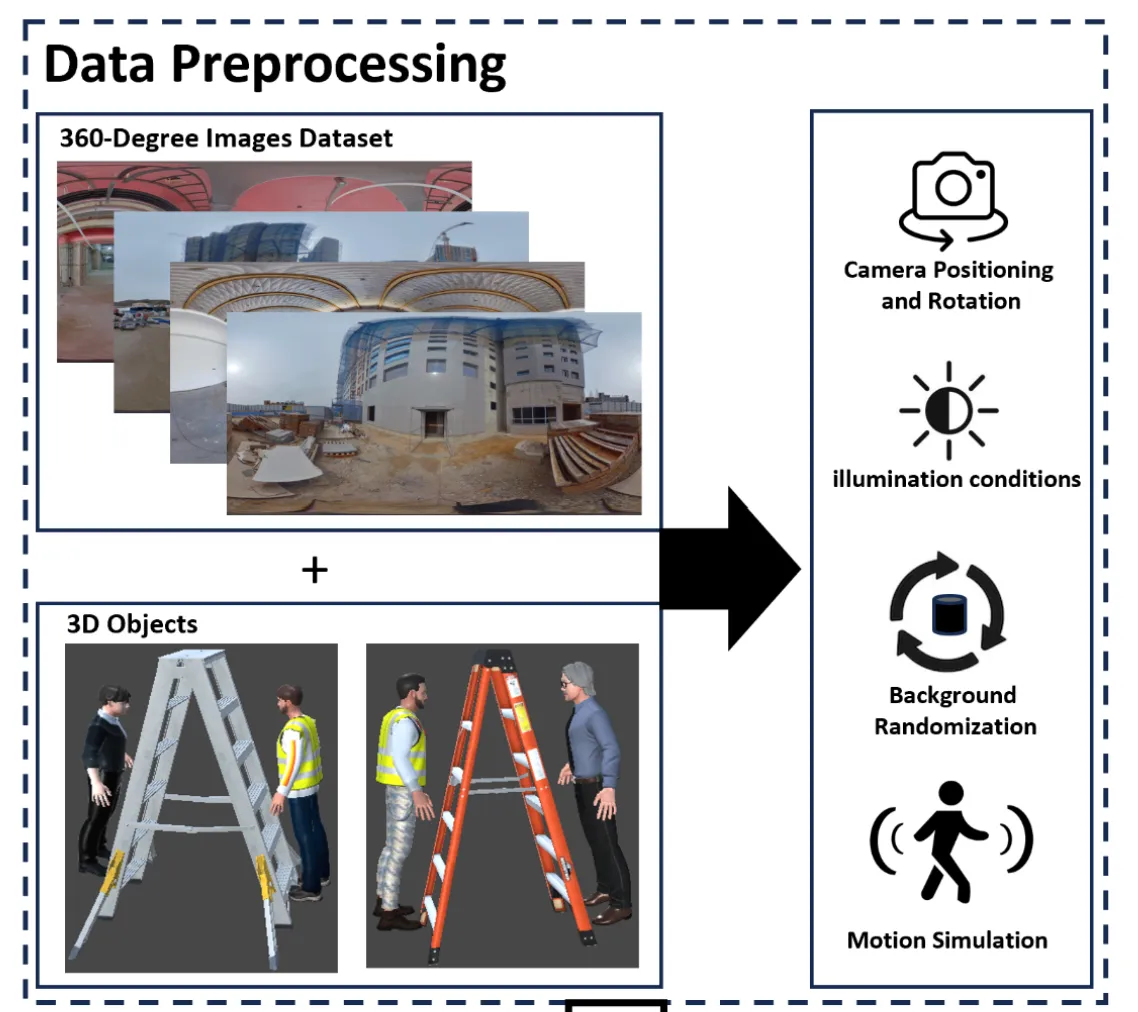
Sabir, A; Hussain, R; Zaidi, SFA; Pedro, A; Soltani, M; Lee, D; Park, C
Utilizing 360-Degree Images for Synthetic Data Generation in Construction Scenarios Conference
CONVR 2023 - Proceedings of the 23rd International Conference on Construction Applications of Virtual Reality, Proceedings e report, 137 Firenze University Press, 2023.
@conference{Sabir2023,

title = {Utilizing 360-Degree Images for Synthetic Data Generation in Construction Scenarios},

author = {A Sabir and R Hussain and SFA Zaidi and A Pedro and M Soltani and D Lee and C Park},

url = {https://library.oapen.org/handle/20.500.12657/89062},

doi = {10.36253/979-12-215-0289-3.70},

year  = {2023},

date = {2023-01-11},

urldate = {2023-01-11},

booktitle = {CONVR 2023 - Proceedings of the 23rd International Conference on Construction Applications of Virtual Reality},

pages = {10},

publisher = {Firenze University Press},

series = {Proceedings e report, 137},

abstract = {Computer vision-based safety monitoring requires machine learning models trained on generalizeddatasets covering various viewpoints, surface properties, and lighting conditions. However, capturing high-qualityand extensive datasets for some construction scenarios is challenging at real job sites due to the risky nature ofconstruction scenarios. Previous methods have proposed synthetic data generation techniques involving 2Dbackground randomization with virtual objects in game-based engines. While there has been extensive work onutilizing 360-degree images for various purposes, no study has yet employed 360-degree images for generatingsynthetic data specifically tailored for construction sites. To improve the synthetic data generation process, thisstudy proposes a 360-degree images-based synthetic data generation approach using Unity 3D game engine. Theapproach efficiently generates a sizable dataset with better dimensions and scaling, encompassing a range ofcamera positions with randomized lighting in tensities. To check the effectivene ss of our proposed method, weconducted a subjective evaluation, considering three key factors: object positioning, scaling in terms of objectrespective size, and the overall size of the generated dataset. The synthesized images illustrate the visualimprovement in all three factors. By offering an improved data generation method for training safety-focusedcomputer vision models, this research has the potential to significantly enhance the automation of the constructionsafety monitoring process, and hence, this method can bring substantial benefits to the construction industry byimproving operational efficiency and reinforcing safety measures for workers.},

keywords = {},

pubstate = {published},

tppubtype = {conference}

}